Coming Home From the Retreat Shouldn't Feel This Bad
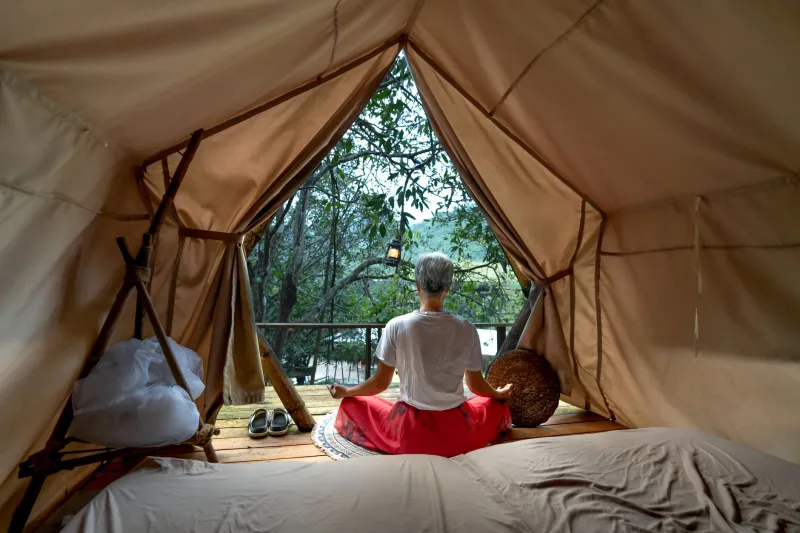
You did the thing. You booked the yoga retreat in the Catskills or the silent weekend upstate. You drove away from Astoria with a duffel bag full of linen clothes and an honest intention to reset. For two or three days, you ate food that came from somewhere you could see, you breathed without thinking about it, and you slept like you hadn't in months.
And then you came home.
You walked back into your apartment, dropped your bag, looked around at the dishes and the noise and the group chat notifications, and felt something collapse inside you. Not dramatically. Just quietly. Like a slow leak.
This is the wellness hangover. It's more common than anyone talks about, and it's worth taking seriously.
Why the Contrast Hits So Hard
The retreat high isn't fake. What you feel during a well-designed wellness experience — lower cortisol, genuine rest, a sense of meaning and community — is physiologically real. Your nervous system actually shifts. Your body gets a taste of what regulated feels like.
The problem is that your regular life hasn't changed at all while you were gone.
The N train is still the N train. Your inbox didn't curate itself. The overhead lighting in your office is still fluorescent and merciless. You return to the same sensory environment, the same stressors, the same rhythms — except now your body has a fresh, vivid memory of something different. The contrast isn't imagined. It's neurological.
Psychologists sometimes call this the return effect — the way re-entry into ordinary life can feel more jarring after a period of intentional calm than it would have if you'd never left. You didn't fail the retreat. The retreat worked. That's exactly why coming back stings.
The Myth of the Lasting High
Here's the part nobody puts in the retreat brochure: the benefits of a weekend wellness experience are real, but they're not permanent. They're more like a deposit than a transformation. And if you treat the retreat as the destination rather than a starting point, you will always feel like you're losing ground the moment you return.
Wellness culture has a complicated relationship with this truth. It loves the before-and-after story. The breakthrough, the turning point, the moment everything changed. What it talks about less is the Tuesday after the breakthrough, when you're tired and the laundry is still sitting there and the insight you had under the stars feels very far away.
That Tuesday is actually where the practice lives.
What the Crash Is Actually Telling You
A wellness hangover is information. It's your nervous system filing a report. And the report usually says one of a few things:
Your baseline is more depleted than you realized. Two days of rest felt revelatory because you were running on fumes before you left. The retreat didn't create the contrast — it just revealed it.
Your daily life is missing something structural. Maybe it's quiet. Maybe it's movement that doesn't feel like punishment. Maybe it's food that you actually tasted, or a morning that didn't start with your phone. The retreat gave you those things temporarily, but your home environment isn't set up to sustain them.
You're grieving the version of yourself who was there. This one is harder to name but worth sitting with. The person you felt like at the retreat — slower, more present, less reactive — that person is you. The crash can sometimes be the grief of leaving that version behind and not knowing how to bring her home.
How to Actually Extend What You Got
You can't replicate the retreat in your Astoria apartment. You shouldn't try. But you can build small structures that honor what the experience pointed toward.
Start with one thing, not five. Choose the single practice from the weekend that felt most true — not most impressive, most true — and give it a real home in your schedule. Ten minutes of morning stillness. A walk to Astoria Park before the day starts. A meal you actually cook and eat without a screen. One thing, done consistently, is worth more than five things you do for a week and abandon.
Give yourself a re-entry window. Don't schedule anything intense for the evening you return. This sounds small and it matters enormously. The crash is often worsened by the expectation that you should be able to absorb a weekend of depth and then immediately perform normally. You can't. Build in a buffer.
Be honest about what your life is asking of you. If every retreat leaves you feeling wrecked when you come home, that's a signal about your daily life that a longer retreat won't fix. The question isn't how to make the high last longer. It's what needs to change closer to home.
The Retreat Was Never the Answer
This isn't an argument against retreats. They can be genuinely useful. A change of environment, a community of intention, a break from the relentless stimulation of city living — these things have real value.
But if you're booking them the way some people book vacations — as an escape hatch from a life that doesn't quite fit — then the crash will always come. Because the retreat ends and the life is still there, waiting.
The most honest thing wellness can offer isn't a peak experience. It's a slightly more honest relationship with yourself, practiced day after day, in ordinary conditions, without the mountain view.
Astoria has its own version of that. The water at dawn. The park when it's not crowded. The studio down the block that isn't glamorous but shows up for you every week. The practice that doesn't require a reservation.
The retreat can remind you what you're looking for. But you have to find it here.