Lying Down Is Not Laziness: Reclaiming Rest in a City That Never Lets You
You finally have a free Sunday. Nothing scheduled, no obligations, the rare and precious gift of unstructured time. And within forty minutes of sitting on your couch, a familiar, low-grade dread starts to crawl in.
I should be doing something. I should be meal prepping, or working on that side project, or at least going for a walk so this counts as active recovery. I shouldn't just be... sitting here.
That feeling has a name. Rest guilt. And it's not a quirk of your personality — it's a feature of the economic and cultural environment most of us are swimming in.
How We Got Here
The United States has a genuinely unusual relationship with rest. We are the only developed nation without federally mandated paid vacation. We celebrate overwork as ambition and treat sleep deprivation like a badge of seriousness. "I'll sleep when I'm dead" is still considered a motivational sentiment in some circles, which should probably alarm us more than it does.
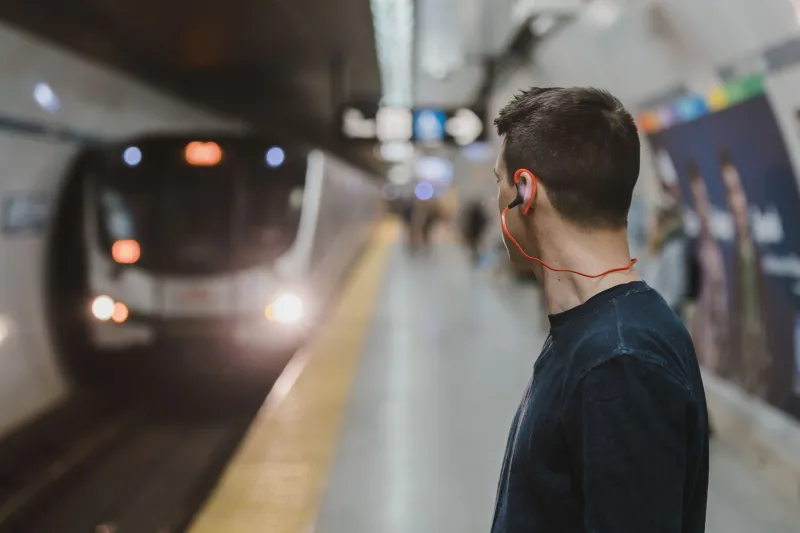
In high-cost urban areas — and Astoria, for all its charm, is absolutely a high-cost urban area — this pressure compounds. Rent doesn't pause because you're tired. The financial anxiety that hums underneath daily life in Queens doesn't take a Sunday off. So rest starts to feel not just unproductive but actively dangerous, like you're letting your guard down at exactly the wrong moment.
And then wellness culture swoops in with what looks like a solution: active recovery. Cold plunges. Yoga flow. A "restorative" routine that still involves a schedule, gear, and a subscription service. Rest has been repackaged as another form of optimization, which means it's no longer really rest at all.
Your Body Doesn't Know What "Productive" Means
Let's be clear about something physiological, because this matters: your nervous system does not distinguish between the stress of a difficult work meeting and the stress of feeling guilty about not being productive. Both activate the same threat-response cascade. Both flood your system with cortisol. Both keep you out of the parasympathetic state — the rest-and-digest mode — where actual cellular repair, memory consolidation, immune function, and emotional regulation happen.
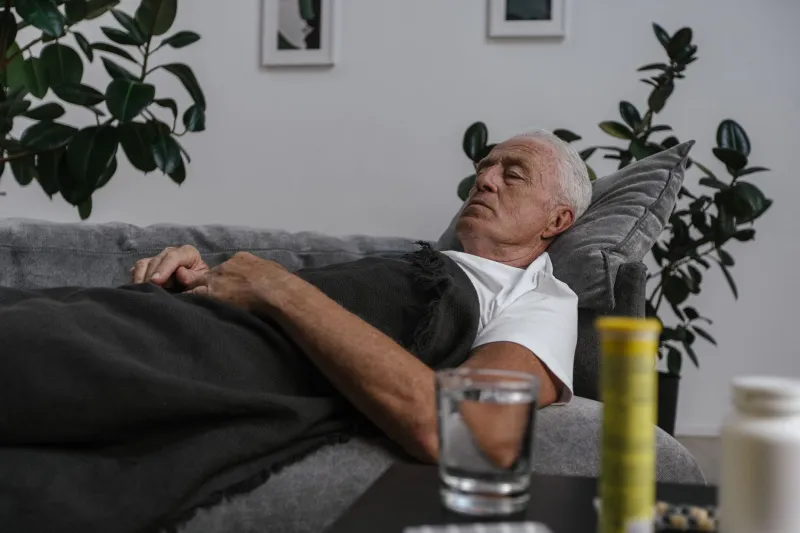
This means that lying on your couch while mentally flogging yourself for lying on your couch is not rest. It's just horizontal anxiety. Your body is getting none of the recovery benefits of downtime because your brain is working overtime generating shame about the downtime.
Genuine rest requires a degree of psychological safety — a felt sense that it is okay, right now, to not be producing anything. That sense is extraordinarily hard to access when you've been marinating in productivity culture your entire adult life.
The Difference Between Active Recovery and Actual Rest
Active recovery has real value. Movement-based recovery — gentle yoga, walking, swimming — promotes circulation, reduces muscle soreness, and can genuinely support the body after exertion. This isn't made up. But it has a specific application: it's useful after intense physical output, not as a universal substitute for doing nothing.
The problem is that we've started treating active recovery as the only acceptable form of downtime. Rest that doesn't look like something — that doesn't have a name, a mat, a playlist, or a trackable metric — feels wasteful. So we replace genuine rest with recovery theater: the foam roller session we post about, the "lazy Sunday" that's actually a carefully curated set of self-improvement activities.
Your nervous system needs both. It needs movement-based recovery after physical stress. And it needs genuine, unstructured, unoptimized rest — the kind where you're not doing it right or doing it wrong, you're just existing — to regulate itself over the long term.
Wellness Culture's Uncomfortable Role in This
It would be easy to point entirely at capitalism and hustle culture, but wellness culture has done its own damage here, and it deserves honest scrutiny.
The industry that's supposed to help us recover has largely succeeded in turning recovery into a performance. Rest is now a ritual. Downtime requires the right candle, the right tea, the right face mask. "Self-care" has been so thoroughly commercialized that it now carries an implicit price tag — if you can't afford the spa day or the infrared sauna session or the adaptogen tincture, the message is that your recovery is somehow less legitimate.
More insidiously, the gamification of wellness — the app streaks, the logged meditation minutes, the completed recovery protocols — has imported the logic of productivity directly into the space that was supposed to be free from it. You're not resting. You're completing your rest goals.
This is not a neutral development. It means that people who are already exhausted and already struggling to justify downtime now have one more metric to fail at.
What Rest Actually Looks Like (And Why It's Allowed to Be Boring)
Genuine rest is not photogenic. It is not a content opportunity. It looks like staring at the ceiling. It looks like reading a novel that has nothing to do with personal development. It looks like sitting in the garden at Socrates Sculpture Park and not taking a single photo of it. It looks like a nap that runs longer than you planned and from which you wake up disoriented and slightly crusty-eyed.
It does not require:
- A new product
- A subscription
- A set duration
- A before-and-after narrative
- Anyone else's awareness that it happened
If rest is going to be genuinely restorative, it has to be allowed to be purposeless. That is, in fact, the entire mechanism by which it works.
Practical Permission Slips
Knowing this intellectually and actually feeling okay about resting are two different things. Here are a few reframes that tend to help — not as a productivity hack, but as genuine cognitive support:
Name the guilt when it shows up. "There's the rest guilt." You don't have to resolve it or argue with it. Just noticing it as a pattern — rather than as evidence that you're genuinely being irresponsible — creates a small but real amount of distance from it.
Separate financial anxiety from rest. If you're lying down and your brain immediately goes to rent or debt, that's a real concern that deserves real attention — at a time when you're equipped to address it. It is not a reason to get off the couch right now. Resting will not make your financial situation worse. Not resting will absolutely make your capacity to navigate it worse.
Rest without logging it. If you've been tracking your sleep, your HRV, your recovery scores — try one day where you don't. Let rest be something that happened and benefited you without being measured.
Give yourself the same grace you'd give someone you love. If your closest friend called you and said they spent Sunday afternoon doing absolutely nothing, you would not tell them they wasted the day. You'd probably say that sounds amazing. Start there.
The Radical Act of Stopping
In a city that runs on output, in a culture that equates worth with productivity, in a wellness industry that has monetized recovery — choosing to simply stop, without optimizing the stopping, is genuinely countercultural.
It is also, increasingly, a health necessity. Chronic rest deprivation isn't a personality type. It's a physiological state with documented consequences for cardiovascular health, immune function, mental health, and cognitive performance. Rest guilt isn't just uncomfortable. It's keeping you sick.
You are allowed to lie down. You are allowed to do it badly, without a protocol, without posting about it, without feeling like you've earned it.
You don't earn rest. You need it. That's enough.