Everyone at the Studio Knows Your Order — But Do You Know Yourself?
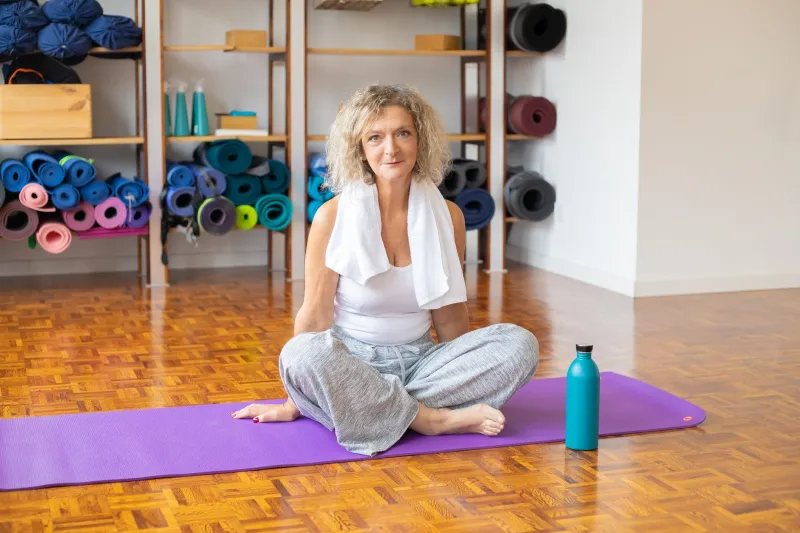
There's a particular kind of comfort that comes from walking into a space where people recognize you. The instructor nods in your direction. The person who always sets up next to you saves you a block. The woman at the front desk has your waiver on file and your name memorized. It feels warm. It feels like belonging.
But here's a question worth sitting with: when was the last time you recognized yourself?
Not in a dramatic, existential-crisis kind of way. More like — when did you last check in honestly with what your body actually needs, rather than showing up to class because that's just what you do on Wednesdays now?
The Community Trap Nobody Warns You About
Astoria has no shortage of wellness infrastructure. Studios, meditation drop-ins, sound bath events, breathwork circles, community acupuncture. The neighborhood has built a whole ecosystem around collective healing, and that's genuinely beautiful. People move here partly because of it.
But ecosystems can become habits. And habits, even healthy-looking ones, can become places to hide.
When we talk about wellness community, we tend to frame it as purely good — the antidote to urban isolation, the solution to the loneliness epidemic, the thing that keeps people accountable to their practice. And it can be all of those things. But community also offers something sneakier: the feeling of being seen without the vulnerability of actually being known. Including by yourself.
You can show up to a yoga class three times a week for two years and still be completely checked out from your own internal experience. You can meditate in a group and spend the entire session wondering what to make for dinner. You can hug your studio friends on the way out and drive home feeling hollower than when you arrived.
Proximity to wellness is not the same thing as practicing it.
Being a Regular Is Not the Same as Being Present
There's a reason we love routines. They're efficient. They reduce decision fatigue. They create structure in lives that can feel chaotic. But routines also have a shadow side — they let us move through experiences on autopilot, which is almost the opposite of what mindfulness is supposed to be doing for us.
Think about the last time you went to a class and genuinely asked yourself, before walking through the door: What do I actually need today? Not what's on the schedule, not what your body did last Tuesday, not what the instructor is known for — but what you, in this specific moment, are actually craving.
Maybe it's stillness. Maybe it's intensity. Maybe it's to lie on the floor and cry for twenty minutes. Maybe it's none of the above, and what you actually need is to cancel the class and call a friend or take a long walk along the waterfront.
When we let the community schedule become our inner compass, we outsource the most important wellness practice of all: listening to ourselves.
Why Belonging Can Mask Disconnection
Social neuroscience has a lot to say about why this happens. Human beings are wired to prioritize belonging. Feeling like part of a group activates the same reward circuits as food or physical safety — it's that fundamental. So when a wellness community gives us that hit of belonging, our nervous system relaxes. We feel okay. We feel held.
The problem is that "feeling okay" and "being okay" aren't the same thing. That sense of social warmth can actually lower our internal alarm system enough that we stop noticing the quieter signals — the chronic tension in our shoulders, the anxiety that spikes every Sunday night, the vague dissatisfaction that no amount of group flow classes seems to touch.
We mistake the comfort of the community for the comfort of self-knowledge. And we stop digging.
Moving from Surface Participation to Genuine Awareness
None of this is an argument against community. Connection is medicine. Studios like the ones scattered across Astoria provide real, meaningful support for people's mental and physical health. The goal isn't to become a solo practitioner who rejects collective spaces.
The goal is to bring yourself into those spaces — not just your body and your mat.
Here are a few concrete ways to start closing the gap:
Do a pre-class check-in. Before you walk through the door, take sixty seconds to notice what's actually happening in your body. Not what you think should be happening. Not what you want to be feeling. What's actually there. Tightness? Fatigue? Restlessness? Let that information guide how you engage in class rather than just following the room.
Name what you're avoiding. Sometimes we go to the studio because we genuinely want to practice. And sometimes we go because we don't want to sit alone with ourselves. Both are human. But knowing which one is operating changes the quality of what you get out of the experience.
Let yourself be a beginner at self-inquiry. Most people in wellness spaces are very comfortable with physical practice and deeply uncomfortable with emotional honesty. You don't have to be good at knowing yourself. You just have to be willing to try.
Build in integration time. After class, before you jump on your phone or rush to wherever you're going next, give yourself five minutes. What came up? What shifted? What do you notice that you didn't notice before? The practice doesn't end when the instructor says namaste.
Be honest about what community is giving you. Is it accountability? Joy? Distraction? All of those are valid — but knowing which one helps you understand what else you might need.
The Studio Can't Do It For You
Here's the thing about the yoga studio on the corner that knows your name: it's a container, not a cure. It can hold space for your practice, but it can't practice for you. It can offer community, but it can't manufacture self-awareness on your behalf.
The most radical wellness move you can make in a neighborhood full of wellness options is to slow down long enough to ask what you actually need — not what the schedule offers, not what your studio friends are doing, not what looks like the right kind of self-care from the outside.
You can be beloved by an entire community and still be a stranger to yourself. And that's not a failure of the community. It's an invitation — to come home to yourself, one honest check-in at a time.
The studio will still be there. And so, finally, will you.