What If Your Body Already Has a Schedule — and You've Been Ignoring It?
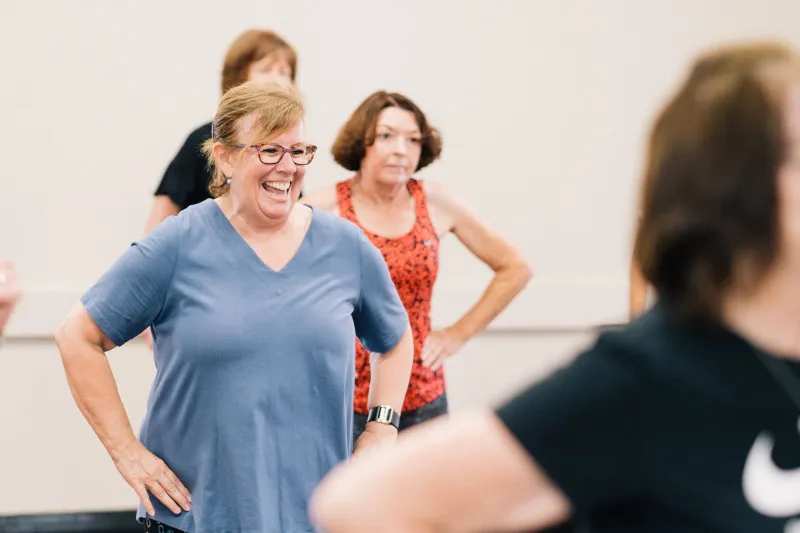
The class is at 7 a.m. on Tuesday. It has always been at 7 a.m. on Tuesday. The instructor is enthusiastic. The playlist is loud. Everyone around you is moving with apparent ease, and you are wondering why your legs feel like wet cement and your patience is at approximately zero.
You assume you're just tired. Or not committed enough. Or that you need to push through.
But what if the problem isn't your discipline? What if the problem is that Tuesday's 7 a.m. class was designed for a body that runs on a 24-hour clock — and yours doesn't?
The Calendar Doesn't Know Your Body
Conventional fitness culture is built around a weekly schedule. Same class, same intensity, same expectations, every Monday and Thursday and Saturday, week after week. That model works reasonably well for some people some of the time. But it was largely designed around bodies that don't experience significant hormonal fluctuation across a month — which is to say, it wasn't designed with many of us in mind.
For people who menstruate, energy levels, recovery capacity, pain tolerance, and emotional resilience shift meaningfully across a roughly four-week cycle. This isn't a complaint or a limitation. It's physiology. And ignoring it doesn't make you tougher — it just makes you more likely to burn out, get injured, or spend half your classes wondering what's wrong with you when nothing is wrong with you.
The concept of cycle syncing — adjusting your movement, nutrition, and rest practices to align with your hormonal phases — has gotten more mainstream attention in recent years. Some of the conversation around it has been overcomplicated or commercially packaged in ways that feel more like a new product line than genuine guidance. But the core idea is straightforward: your body's needs are not static, and your wellness practice probably shouldn't be either.
A Rough Map of What's Actually Happening
You don't need to track seventeen metrics or buy a special app to start working with your cycle rather than against it. A basic understanding of the four phases is enough to start noticing patterns.
The follicular phase — roughly the week or so after your period ends — tends to bring rising energy, sharper focus, and a greater capacity for intensity. This is often a good window for more challenging classes, new skills, or heavier lifting if that's your thing. Your body is primed for output.
Ovulation, which falls around the midpoint of your cycle, often brings a peak in energy and social openness. Many people feel their most physically capable and emotionally engaged during this window. Great time to try that class you've been putting off, or to lean into community-based practices.
The luteal phase — the roughly two weeks before your period — is where things get more nuanced. Early in this phase you may still feel strong, but as it progresses, your body starts prioritizing conservation. Fatigue increases. Recovery takes longer. Emotional sensitivity rises. This is not weakness. This is your body doing exactly what it's supposed to do. Fighting it with high-intensity workouts five days a week is like trying to sprint through mud and then being surprised you're exhausted.
Menstruation itself is a phase, not just an inconvenient pause between phases. Rest, gentle movement, and genuine recovery aren't indulgences during this window — they're appropriate responses to what your body is doing.
This Applies Beyond Hormonal Cycles Too
Not everyone has a menstrual cycle. And even for those who do, the framework matters beyond the hormonal specifics.
Energy fluctuates seasonally. It fluctuates with stress, sleep, grief, and life transitions. The broader point — that your body has its own rhythms and that wellness practices work better when they respond to those rhythms rather than override them — applies to everyone.
If you've noticed that you feel inexplicably flat every January, that's not a motivation problem. If you feel wired and restless in late summer and slow and inward in November, that's not inconsistency. Seasonal energy shifts are real and documented, and building a practice that acknowledges them is smarter than white-knuckling through them.
What This Looks Like in Practice (Without Overhauling Your Life)
You don't need to quit your Tuesday class. You need to stop expecting Tuesday's class to feel the same every week and stop blaming yourself when it doesn't.
Start by tracking, loosely, how you feel across a few weeks. Not obsessively — just a quick note at the end of each day about energy, mood, and how movement felt. After a month, patterns usually emerge that are hard to argue with.
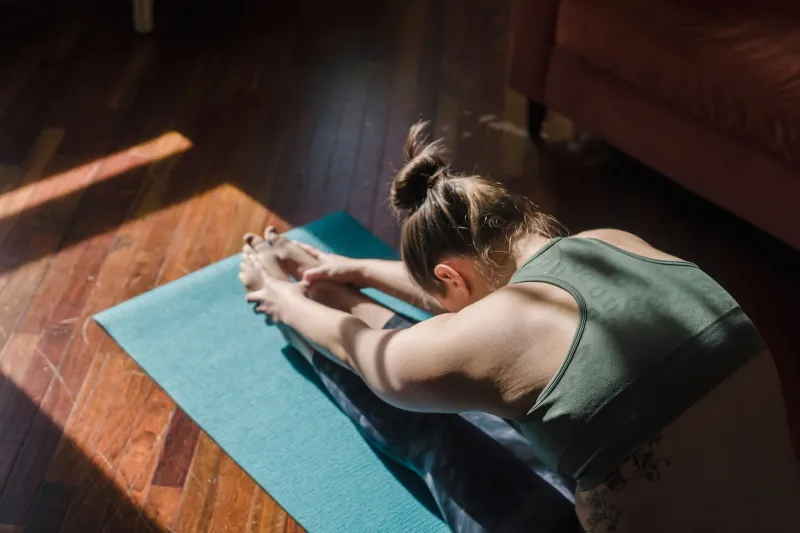
Then start making small adjustments. Swap the high-intensity class for a yin session during the weeks your body is asking for it. Add a restorative practice in the days before your period instead of pushing harder. Walk to Astoria Park on a slow morning instead of forcing yourself into a HIIT class you'll resent.
If you're working with a trainer or attending regular classes at a studio, you don't have to explain your entire cycle to anyone. You just have to give yourself permission to modify, rest, or choose differently based on what your body is actually telling you.
The Radical Act of Listening
Wellness culture has a complicated relationship with listening to the body. It says it values this. It sells it, actually — body awareness, intuitive movement, honoring your needs. But then it builds a class schedule that doesn't flex, creates a culture where showing up and pushing through is always praised, and quietly implies that adjusting your practice based on how you actually feel is giving up.
It isn't giving up. It's the whole point.
Your body is not a machine that runs on a fixed program. It's a system with its own intelligence, its own seasons, its own schedule. The practice that actually serves you is the one that learns to read that schedule and work with it — not the one that ignores it and calls the resulting exhaustion a personal failing.