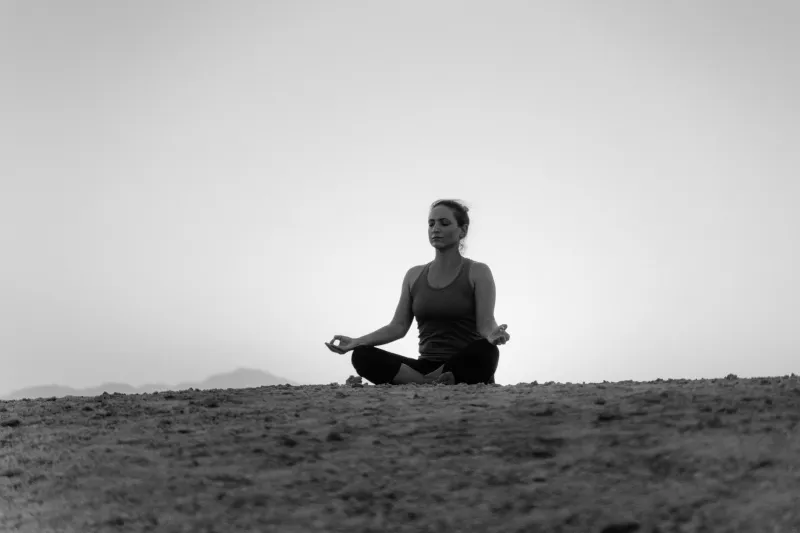
Stop Stealing Your Neighbor's Morning Routine and Start Building Your Own

Somewhere between your first cup of coffee and your second scroll through Instagram, you've probably done it. You've seen a neighbor's 5 a.m. cold plunge post, or watched a coworker's story about their 45-minute meditation followed by a green juice and a three-mile run — and felt that quiet, creeping sense that you're doing something wrong. That your morning, with its snooze button and reheated coffee and frantic search for clean socks, is somehow a moral failure.
Welcome to the comparison trap. And in a neighborhood like Astoria — where everyone knows everyone, where the same faces show up at the farmers market and the yoga studio and the coffee shop on 31st — it hits a little differently.
Proximity Makes It Personal
Comparison has always been part of human nature. But social media turned it into a 24-hour broadcast, and tight-knit urban communities like ours gave it a hyperlocal edge. It's one thing to see a wellness influencer in California doing sunrise yoga on a cliff. It's another thing entirely to watch someone you actually know — someone who takes the same N train, shops at the same Associated, lives two blocks away — apparently thriving on a routine that makes yours look like a disaster.
The closeness makes it feel more achievable, which sounds encouraging. But it also makes your own gap feel more embarrassing. If she can wake up at 5:30, meditate for 30 minutes, and still make it to work on time, why can't you? The answer, almost always, is that you don't actually know the full picture. You know the highlight reel. And the highlight reel is a terrible wellness coach.
The Problem with Borrowed Blueprints
Here's what nobody tells you about morning routines: they're deeply, almost absurdly personal. A routine that works brilliantly for someone else is built around their sleep schedule, their job, their body, their family obligations, their history with anxiety, their relationship with food, their commute — a hundred invisible variables you can't see from a curated Instagram post.
When you try to replicate someone else's practice wholesale, you're not just copying a habit. You're trying to fit their life into yours. And that almost never works. What tends to happen instead is a cycle of attempted adoption, inevitable failure, and guilt — which is maybe the least wellness-promoting emotional state imaginable.
There's also a subtler problem. When you're constantly measuring your practice against someone else's, you stop asking the most important question: What do I actually need? You get so busy trying to keep up that you never slow down enough to figure out whether what you're chasing is even right for you.
What Your Body Is Actually Asking For
This is where a genuine mindfulness practice earns its keep — not as an aesthetic or a productivity hack, but as a tool for honest self-inquiry. Before you can design a morning routine that serves you, you have to get curious about yourself. Not the version of yourself you want to project, but the actual one.
Are you a natural early riser, or do you function better with a slower start? Do you need movement in the morning to feel grounded, or does exercise later in the day work better for your energy? Is silence restorative for you, or does it make your anxiety louder? Do you need structure, or does too much rigidity make you want to blow the whole thing up by Wednesday?
These aren't rhetorical questions. They're the foundation of a sustainable practice. And they require you to actually pay attention to yourself — which is, not coincidentally, exactly what yoga and mindfulness are trying to teach you.
Designing a Practice That Fits Your Life
A morning routine doesn't need to be impressive. It needs to be functional. It needs to make you feel more like yourself by the time you walk out the door, not more behind.
For some people in Astoria, that looks like a 6 a.m. class at the studio followed by a walk along the waterfront. For others, it looks like ten minutes of breathing exercises on the couch before the kids wake up. For others still, it's a single cup of coffee consumed in silence before the chaos begins — and that's it. That's the whole routine. And if it works, it's enough.
Start smaller than you think you need to. Seriously. The comparison trap thrives on grandiosity — on the idea that a meaningful practice has to be elaborate to count. It doesn't. Consistency with something small beats sporadic heroism with something ambitious every single time.
And please, for the love of your nervous system, stop timing your wellness against someone else's clock. The neighbor who posts their 5 a.m. workout isn't your benchmark. They're just a person, doing what works for them, in a life you can't fully see.
A Note on Social Media and Selective Muting
If certain accounts — even people you genuinely like — are consistently making you feel worse about your own practice, that's information worth acting on. Muting isn't mean. It's a form of self-care that doesn't require a single supplement or a sunrise alarm. You're allowed to curate your environment, including the digital one, in ways that support your mental health rather than quietly erode it.
This is especially true in a community as interconnected as ours. You don't have to opt out of connection. You just get to be intentional about which comparisons you're inviting in.
The Routine That's Already Working
Here's the thing worth sitting with: you probably already have a morning practice. It might not look like what you see online, but there's something you do — some sequence of small acts — that gets you from asleep to functional. Before you burn it down and start over with someone else's template, it's worth asking what's actually working in what you already do.
Maybe your commute walk to the subway is your meditation. Maybe your morning conversation with a neighbor is your community ritual. Maybe the chaos of getting your household moving is, in its own messy way, a practice in presence and adaptability.
Wellness isn't a competition, even when it feels like one. And your morning doesn't need to win anything. It just needs to work for you — the real, complicated, beautiful, slightly-sleep-deprived you who lives your actual life in this actual neighborhood.
That's the practice. The rest is just noise.