Running on Empty: How Outer-Borough Hustle Is Quietly Killing Your Yoga Practice
Let's be honest for a second. You didn't move to Astoria — or stay in Astoria — because you wanted a slow life. You're here because it's close enough to Midtown to be practical, vibrant enough to feel alive, and diverse enough to remind you that the world is bigger than your office Slack channel. You like the energy. You run on it.
And then you walk into a yoga class and someone asks you to be still.
For a lot of us, that's where things fall apart.
The Speed Trap Nobody Talks About
New York City — including its outer boroughs — runs on a particular kind of urgency. Even in Astoria, where the vibe is arguably more neighborhood than Manhattan grind, the culture of productivity seeps in everywhere. You optimize your grocery run. You listen to podcasts while walking the dog. You answer emails on the N train before you've even had coffee.
This isn't a character flaw. It's adaptation. Your nervous system has learned to equate busyness with safety, and stillness with falling behind.
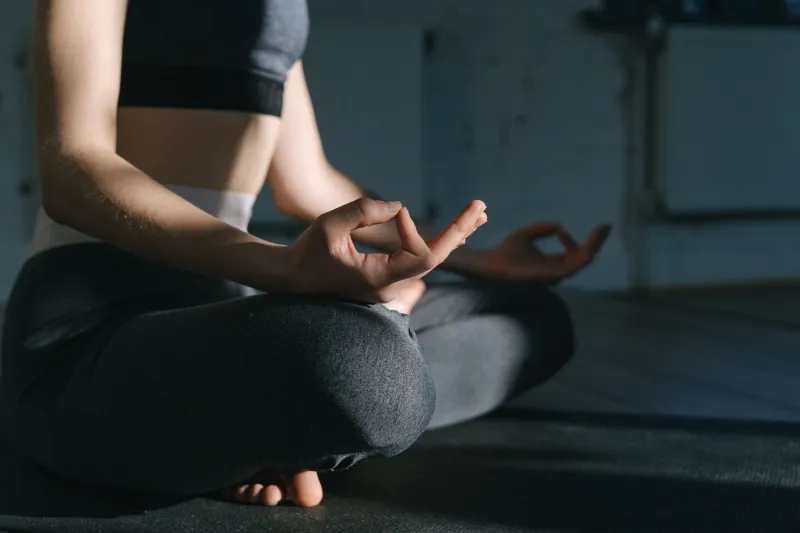
The problem? Yoga — real yoga, not just the Instagram version — asks you to do the exact opposite. It asks you to slow your breathing when everything in your body wants to speed up. It asks you to sit with discomfort instead of scrolling past it. It asks you to show up without an agenda.
For people wired by NYC living, that's not relaxing. That's threatening.
Why Your Practice Keeps Getting Dropped
Here's the pattern we see all the time: Someone discovers yoga during a particularly stressful stretch — a brutal work quarter, a breakup, a health scare. They feel genuinely better after a few classes. They commit. They buy the good mat.
And then life accelerates again, and yoga is the first thing to go.
Psychologists call this intention-behavior gap — the chasm between what we genuinely want to do and what we actually do when under pressure. For wellness practices specifically, research suggests that routines requiring the most from us cognitively and emotionally are the ones most likely to get abandoned when our mental reserves are low. Which is exactly when we need them most. It's a brutal irony.
But there's something even more specific happening for people in fast-paced urban environments. When your baseline stress level is chronically elevated, sitting in a quiet room with your own thoughts can feel actively uncomfortable — even anxiety-inducing. You came to yoga to feel better, but the slowing-down part feels worse before it feels better. So you leave. Or you just stop coming back.
The Mismatch Is Real — But It's Not Permanent
Here's what nobody in the wellness world likes to say out loud: your lifestyle and your yoga practice might genuinely be in conflict right now, and that's okay to acknowledge. Pretending otherwise — telling yourself you just need more discipline or a better morning routine — often makes things worse.
The goal isn't to force your busy life into a yoga-shaped box. It's to find the entry points where the two can actually meet.
Start Smaller Than You Think You Should
Five minutes of intentional breathing before you open your phone in the morning does more for your nervous system than a 90-minute class you dread and skip. We're not saying skip the class. We're saying build the neurological habit first. Let your body remember what it feels like to not be in a hurry — even briefly — before you ask it to sustain that for an hour.
Match Your Practice to Your Energy, Not Your Calendar
Tuesday night at 7pm sounds great when you're scheduling it on Sunday. But if Tuesday is your hardest workday, you're setting yourself up to cancel. Look at your actual week — not your ideal week — and find the slots where you're naturally transitioning anyway. Right after your commute home. The gap between lunch and your afternoon calls. These liminal moments are goldmines for short practices.
Choose Styles That Meet You Where You Are
Not every yoga class is the same, and not every class is right for every season of your life. If you're running hot and overstimulated, a vigorous vinyasa flow might actually amp you up further. Yin yoga, restorative classes, or even a slow Hatha session can serve as genuine nervous system resets — but only if you let them. Experiment with what actually leaves you feeling better, not just what looks impressive on a schedule.
Redefine What 'Showing Up' Means
Our culture celebrates the all-or-nothing approach to wellness. You either crushed your workout or you failed. But yoga's entire philosophical foundation is built on something different — the idea of abhyasa, or consistent, steady practice over time. Showing up imperfectly and regularly will always beat the occasional perfect session you've been building up in your head.
Astoria Can Actually Work For You Here
Here's the thing about living in a neighborhood like Astoria: the community infrastructure for wellness is genuinely accessible in a way it isn't in, say, a car-dependent suburb. Studios are walkable. Parks are usable. There are farmers markets, community gardens, and pockets of genuine quiet if you know where to find them.
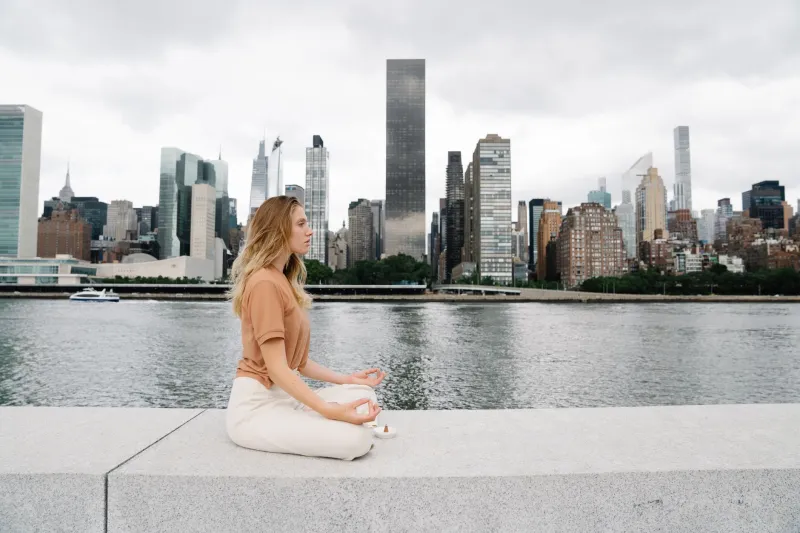
The neighborhood itself can become part of your practice if you let it. A slow walk along Astoria Park before the weekend crowds show up. Five minutes of breathing by the waterfront. A commitment to eating at least one meal without your phone this week.
None of this is revolutionary. But small, consistent acts of intentionality — woven into the life you already have, not the life you wish you had — are exactly how sustainable wellness actually works.
You don't need to slow your whole life down. You just need to find the places where slowing down is already possible, and start there.