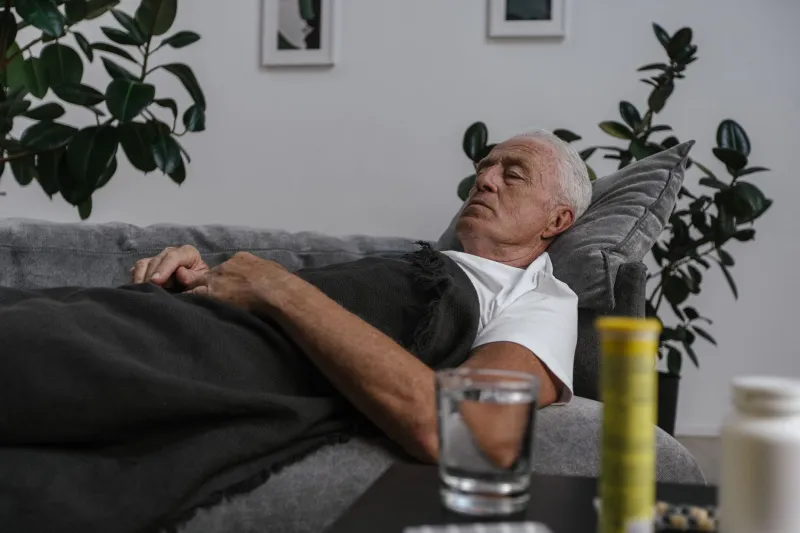
When Wellness Becomes the Problem: How Health Culture Can Quietly Wreck Your Mental Health
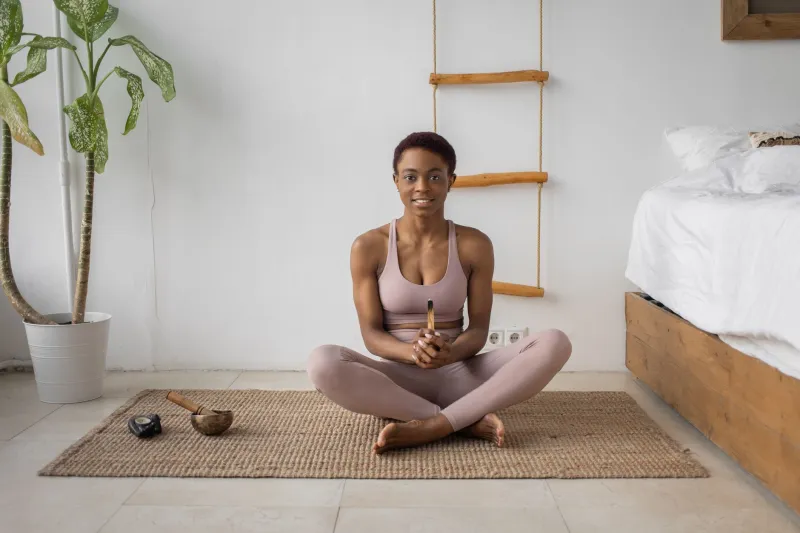
You moved here for a reason. Maybe it was the farmers market on weekends, the studio that offers three different styles of yoga before noon, or the fact that your neighbors actually talk about breathwork at brunch without anyone flinching. Astoria has a reputation — and honestly, it earned it. But somewhere between your first cold-pressed green juice and your fourth unanswered reminder to "practice gratitude," something shifted.
You're more anxious than you were before.
Not less. More.
And you can't quite explain why, because objectively, everything looks like wellness. So what gives?
The Paradox Nobody Talks About
Here's the uncomfortable truth: wellness culture, for all its genuine benefits, has a shadow side. And that shadow looks a lot like perfectionism wearing athleisure.
When you surround yourself with a community that's deeply invested in health — physical, mental, spiritual — you don't just absorb the good stuff. You also absorb the unspoken rules. The implicit ranking system. The quiet, persistent suggestion that if you're not thriving, you're not trying hard enough.
Psychologists have a name for this kind of internalized pressure: maladaptive perfectionism. It's the flavor of perfectionism that doesn't drive you toward excellence so much as it drives you away from feeling okay about yourself. And wellness culture, ironically, is one of its favorite breeding grounds.
The logic goes something like this: You have access to every tool. The meditation apps, the breathwork classes, the adaptogens, the community. If you're still anxious, still scattered, still not sleeping well — that must be on you. You must be doing it wrong.
That thought? That's not wellness. That's a trap.
Optimization Is Exhausting
There's a particular kind of fatigue that comes from treating your own life like a performance review. And wellness culture — especially in neighborhoods where health is practically a civic identity — has a way of turning self-care into a productivity project.
Suddenly, rest isn't rest unless it's "restorative." A walk isn't a walk unless you're being present. Even your anxiety needs to be processed correctly, or it doesn't count. You end up in this bizarre loop where the very practices meant to reduce stress become stress-producing when you don't execute them well enough.
This isn't hypothetical. Research on what some clinicians call "wellness anxiety" or "health perfectionism" consistently shows that people who become highly invested in health optimization can experience elevated baseline anxiety — not because the practices don't work, but because the pressure to do them right overrides any benefit they might provide.
And living in a place where wellness is woven into the social fabric? That pressure gets louder.
The Social Comparison Layer
Here's another piece of this that's worth sitting with: community is powerful, but community also creates comparison.
When your neighbor is training for a triathlon, your coworker is deep into a 30-day Ayurvedic reset, and your Instagram feed is populated with people who seem to have genuinely figured out morning routines — it's nearly impossible not to measure yourself against all of that. Even when you know, intellectually, that comparison is a joy-thief, the emotional circuitry doesn't really care about what you know.
Astoria's wellness community is genuinely warm and welcoming. But warmth doesn't automatically dissolve the ambient pressure to keep up. And for people who are already prone to anxiety or self-criticism, that ambient pressure can quietly compound into something heavier.
This isn't an indictment of the community. It's just an honest look at what happens when any value system — even a healthy one — becomes a measuring stick.
Reclaiming Wellness on Your Own Terms
So what do you actually do with this? You're not going to stop going to yoga. You're not going to throw your supplements in the trash. And you shouldn't have to. The goal isn't to abandon the tools — it's to change your relationship with them.
Start by auditing your "should" list. How many of your wellness practices feel genuinely nourishing versus obligatory? There's a meaningful difference between doing something because it makes you feel good and doing it because you'll feel guilty if you don't. The latter is not self-care. It's self-management, and it's exhausting.
Give yourself permission to do things badly. A five-minute meditation where your mind wanders the entire time still counts. A yoga class where you spend half of it staring at the ceiling still counts. Imperfect engagement with wellness practices is infinitely more useful than perfect avoidance of them.
Disconnect wellness from identity. This one's harder in a neighborhood where health is part of the social currency, but it matters. Your worth is not determined by how clean your diet is, how consistent your practice is, or how enlightened you seem at dinner parties. You are allowed to be a whole person who sometimes eats pizza and skips the gym and still deserves to feel okay.
Find at least one practice that has zero performance attached to it. For some people, that's walking without headphones. For others, it's cooking something messy and impractical just because it sounds good. The point is to have at least one space in your wellness life that belongs entirely to you — not to the community, not to the algorithm, not to whoever's watching.
The Neighborhood Is a Resource, Not a Report Card
Astoria genuinely has a lot to offer. The parks, the studios, the farmers markets, the community — these things are real, and they can absolutely support a healthier, more grounded life. That's not the problem.
The problem is when we let the abundance of resources become evidence of our inadequacy. When the presence of a meditation center two blocks away starts to feel like a silent accusation every time we walk past it without going in.
Your neighborhood is not evaluating you. The green juice shop doesn't know your name. The yoga studio is not keeping score.
You are allowed to live here, use what serves you, leave what doesn't, and feel genuinely okay on a Tuesday afternoon without having optimized a single thing.
That, honestly, might be the most radical wellness practice of all.
Namaste Astoria is your neighborhood's reminder that wellness is a practice, not a performance. Breathe deep. Live well. Find your balance — on your own terms.