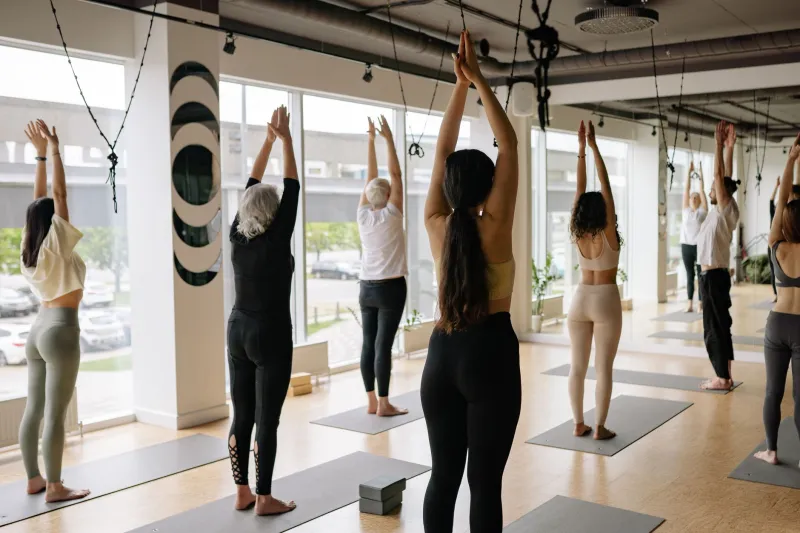
Your Overcrowded Neighborhood Is a Nervous System Teacher — If You Let It Be
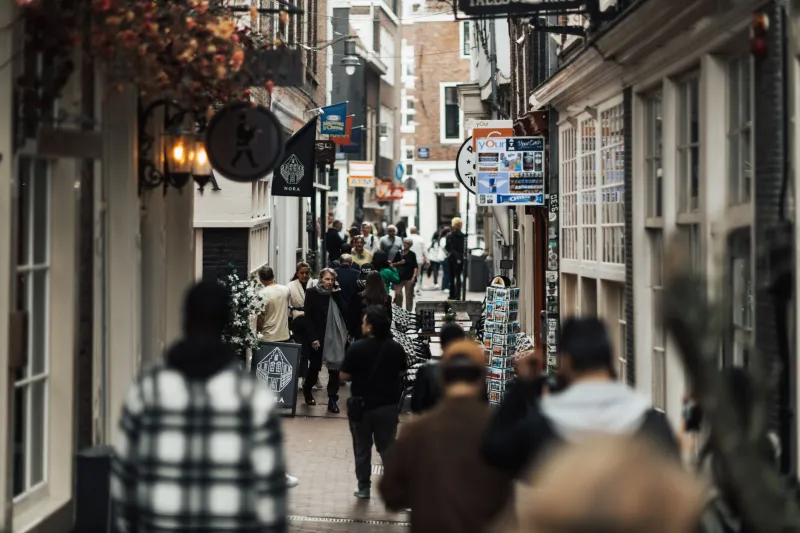
Let's be honest: when people imagine a wellness lifestyle, they're usually picturing something quieter than Astoria. They're picturing open space, soft light, maybe a trail. Not a packed platform at Queensboro Plaza during rush hour. Not the corner of 31st and Ditmars at 6 p.m. on a Friday, when three separate conversations, a delivery truck, and someone's very committed car horn are all competing for the same airspace.
And yet — stay with me here — that chaos might be exactly what your nervous system needs to learn from.
The Problem With Seeking Only Calm
There's a version of wellness culture that treats stimulation as the enemy. The goal, according to this framework, is to reduce noise, limit input, curate your environment until it's soft enough that your nervous system can finally relax. Quiet mornings. Digital detoxes. Retreats to places where the only sound is wind.
None of that is inherently wrong. Rest and sensory reduction have genuine value, especially for people who are already overstimulated and under-recovered.
But there's a problem with making calm your only training ground: it doesn't actually build resilience. It builds dependence on conditions.
If you can only find your center when everything around you is quiet and controlled, then your wellbeing is permanently hostage to circumstances. The moment the world gets loud — and in Astoria, the world gets loud on a pretty reliable schedule — you're back at zero.
True nervous system regulation isn't just the ability to rest in peace. It's the ability to find steadiness in the middle of the mess.
What Density Actually Does to Your Brain
Researchers who study urban environments have long documented the ways that density creates stress — elevated cortisol, heightened vigilance, a nervous system running hotter than it would in quieter surroundings. That's real, and it's not nothing.
But the same research also points to something less discussed: people who live in dense, stimulating environments and learn to navigate them intentionally often develop what's sometimes called stress inoculation. Their nervous systems become more flexible — better at activating when activation is needed, and better at returning to baseline afterward.
This is the same principle behind exposure-based therapies, cold water immersion, and certain breathwork practices. Controlled, intentional engagement with discomfort trains your system to respond rather than just react.
Your neighborhood, whether you've thought of it this way or not, has been offering you this training every single day.
The Mindfulness That Lives in the Crowd
Here's where it gets practical. The crowded streets and packed trains of Astoria aren't just obstacles to your wellness — they're invitations to practice something that a quiet studio can't fully teach: present-moment awareness under pressure.
Consider what actually happens when you're standing on a rush-hour platform. Your senses are flooded. Your personal space is nonexistent. Someone is eating something that smells aggressively. There's a delay announcement. Your instinct — everyone's instinct — is to contract. To check the phone, to mentally leave the situation, to find some interior quiet room and lock the door.
But what if you didn't? What if, instead of escaping the moment, you got more into it?
Not in a forced, performative way. Just — noticing. The specific quality of the noise. The way your feet feel on the platform floor. The breath moving in and out while everything around you hums and presses. Letting the chaos be exactly what it is without needing it to be different.
This is not a hack or a trick. It's a practice, and it's one that transfers. People who can find a moment of genuine presence in a crowded subway car tend to be better at finding presence in difficult conversations, stressful work situations, and the thousand small moments of friction that make up a real human life.
Reading the Neighborhood as a Practice
Astoria is particularly interesting as a sensory environment because it's not one thing. It shifts block by block, hour by hour. The stretch along Steinway at dinner time is a completely different nervous system experience than the waterfront at 7 a.m. The farmers market on a Saturday morning has a different texture than the same streets on a Tuesday night.
Learning to read those shifts — to notice how your body responds to different densities, rhythms, and energy levels — is itself a form of mindfulness practice. It's the kind of body literacy that yoga and meditation try to cultivate, happening in real time, out in the world.
Try this: pick one regular route you walk — to the subway, to the grocery store, to the studio — and spend a week paying deliberate attention to how your nervous system responds along the way. Not judging it, not trying to change it. Just noticing. Where do you brace? Where do you soften? What triggers a small spike of alertness? What settles you down?
You'll start to build a map of your own reactivity, which is some of the most useful self-knowledge you can have.
Resilience Is Not the Same as Numbness
One important distinction: learning to navigate stimulation without being overwhelmed by it is not the same as becoming numb to it. The goal isn't to stop noticing the chaos. It's to be able to notice it without being hijacked by it.
The difference shows up in how you feel afterward. Numbness leaves you flat, disconnected, a little hollow. Resilience leaves you present — tired maybe, but still here, still in contact with your own experience.
If Astoria is grinding you down rather than toughening you up, that's information too. It might mean you need more deliberate recovery built into your days — more of those quiet mornings, more time near the water, more intentional contrast between stimulation and rest. The city can be your teacher without also being your entire curriculum.
The Unexpected Gift in the Noise
There's something almost funny about the fact that you may have moved to — or stayed in — a dense, chaotic, gloriously overcrowded neighborhood partly in search of a richer life, and then spent energy wishing it were quieter.
Astoria doesn't owe you stillness. But it offers you something arguably more valuable: the chance to practice finding stillness inside yourself, even when everything outside is doing its thing.
That's not a consolation prize. That's the real work.