When Everyone at the Acupuncturist Knows Your Name: Navigating Privacy in a Tight-Knit Wellness Scene
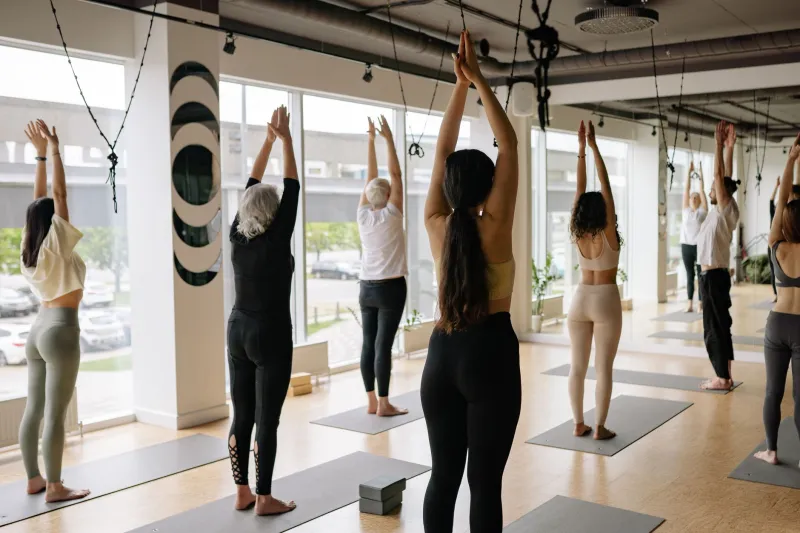
There's a moment that a lot of people in Astoria's wellness community have experienced — maybe you have too. You're lying on a treatment table, or settling into a therapy chair, or unrolling your mat in a studio you've been coming to for years. And you realize, mid-exhale, that the person treating you was at the same dinner party as your ex last weekend. Or that your therapist's office is two blocks from your yoga instructor's apartment. Or that the friend who referred you to this acupuncturist is also, as it turns out, a regular client.
It's a small neighborhood. The wellness scene is smaller. And the intimacy that makes it feel like home can occasionally make it feel like a fishbowl.
This isn't a complaint — or at least, it doesn't have to be. But it is a complexity worth talking about honestly, because how you navigate privacy in a connected community has real implications for how deeply you can actually heal.
The Gift and the Catch of Small-Community Wellness
One of the genuine strengths of Astoria's wellness culture is its relational quality. You're not booking a session with a stranger in a sterile office tower. You're working with practitioners who live here, who know the neighborhood, who maybe shop at the same greenmarket you do. That familiarity builds trust faster. It lowers the activation energy for showing up.
Research consistently shows that therapeutic alliance — the quality of the relationship between a client and their practitioner — is one of the strongest predictors of positive outcomes in mental health and bodywork alike. Community embeddedness supports that. Shared context supports that. Feeling known supports that.
But the same closeness that accelerates trust can also create what therapists and ethicists call "boundary complexity." When your practitioner exists in your social world outside of sessions, the container that makes vulnerable work feel safe starts to have... seams.
The Confidentiality Question Nobody Wants to Ask Out Loud
Let's be direct about something: licensed therapists, psychologists, and many other healthcare practitioners are bound by strict confidentiality laws. HIPAA is real. Ethical codes are real. Your therapist cannot and should not be sharing your business — not with your mutual friends, not with the yoga instructor they see for their own practice, not anywhere.
But the wellness world is also full of practitioners who aren't operating under those same formal frameworks. Yoga instructors, wellness coaches, sound healers, meditation teachers — these are often deeply skilled, deeply caring people whose work is genuinely transformative. They are not, however, necessarily bound by the same professional confidentiality structures.
And even for licensed practitioners, the concern isn't usually intentional disclosure. It's the ambient social weirdness of running into someone in a professional context at a neighborhood bar on a Friday night. It's the low-grade anxiety of wondering whether your yoga teacher knows why you've been crying in savasana lately. It's the question of whether the thing you said in a vulnerable moment in a group class is now somehow part of your social reputation.
These concerns are legitimate. And they deserve more airtime than they typically get in wellness spaces.
When the Healing Space Starts to Feel Observed
One of the more insidious effects of this dynamic is the way it can quietly shape what you're willing to say or do in a healing context. If you're worried — even subconsciously — that your vulnerability might circulate, you self-censor. You stay at the surface. You present the version of yourself that's "doing fine, working on it, making progress" instead of the version that's actually struggling.
This is a real loss. The most meaningful therapeutic and somatic work happens in the places we don't usually let people see. When the container feels porous, we protect ourselves by staying shallow. And staying shallow is exactly the opposite of what we came here to do.
Several people we've spoken with in Astoria's wellness community describe a particular kind of calculation — choosing practitioners based partly on how far outside their social circle they are. Deliberately seeking out the therapist in Long Island City rather than the one two blocks away. Choosing the studio where they don't know anyone rather than the one where they know everyone.
That's not paranoia. That's a reasonable response to a real structural tension.
What Practitioners Can Do — And What You Can Ask For
If you're a practitioner in a tight-knit community, this is worth sitting with. How do you hold space for clients who know you socially? How do you signal — clearly and credibly — that what happens in session stays in session? How do you handle the awkward moment at a neighborhood event when a client is there and neither of you quite knows how to navigate it?
The most trustworthy practitioners in close communities tend to address this directly and early. They name the dual-relationship dynamic. They establish clear protocols for social encounters. They create explicit agreements about confidentiality that go beyond the legal minimum and into the relational.
As a client, you're allowed to ask about this. You're allowed to say: "We have some overlapping social connections — how do you handle that?" A practitioner worth working with will not be defensive about that question. They'll welcome it.
Finding Your Real Healing Space
None of this means you can't do deep work in a small community. People have been healing in villages and tight-knit neighborhoods since long before wellness was an industry. Intimacy and healing have coexisted forever.
But it does mean being intentional. It means choosing practitioners who are clear about boundaries — not just legally but relationally. It means knowing your own comfort level with overlap and honoring it, even when the most convenient option is the one who's already in your circle. It means recognizing that the warm, connected feeling of Astoria's wellness scene is a feature, not a bug — and that like any feature, it comes with trade-offs worth understanding.
Your healing deserves a real container. In a neighborhood where everyone knows everyone, building that container takes a little more thought. But it's absolutely possible — and it's worth doing right.