The Belonging Bait-and-Switch: What Wellness Communities Are Actually Selling You
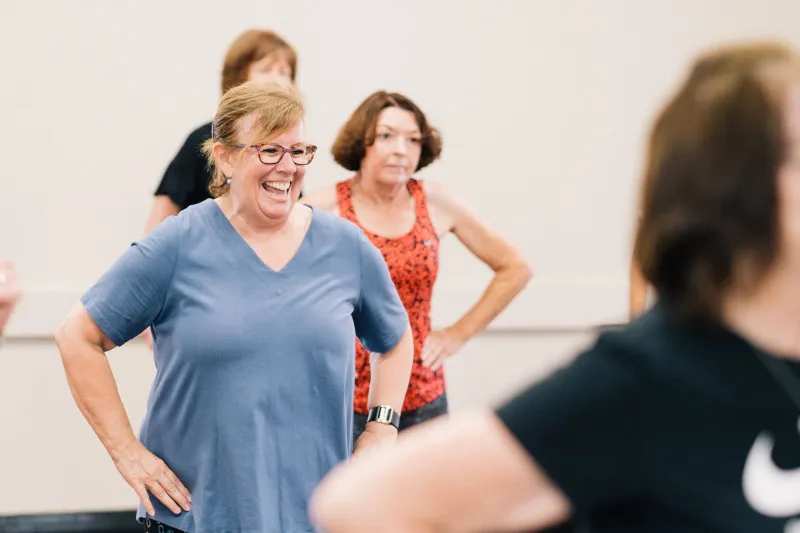
There's a particular ache that comes after a really good fitness class. You've moved, you've sweated, you've breathed in sync with a room full of people. The instructor knew your name. Someone held the door for you on the way out. For about forty-five minutes, you were part of something.
And then you put your earbuds back in, walked out onto the sidewalk, and felt, somehow, more alone than when you arrived.
If you've experienced this, you're not broken. You've just bumped into one of the central contradictions of the modern wellness economy: an industry that monetizes the language of connection while structurally delivering the experience of isolation.
The Promise in the Pitch
Scroll through the Instagram feed of nearly any wellness brand — studios, apps, supplement companies, retreat organizers — and you'll find the word "community" appearing with remarkable frequency. "Join our community." "Find your tribe." "You belong here." The messaging is warm, inclusive, and deliberate. It's not accidental that wellness marketing sounds like a letter from a really caring friend.
This language works because it's targeting something real. Loneliness in the United States has reached what public health officials have started calling epidemic proportions. Former Surgeon General Vivek Murthy dedicated a significant portion of his tenure to documenting the health consequences of social isolation — consequences that include elevated cortisol, disrupted sleep, and increased risk for cardiovascular disease and early death. Humans need belonging the way they need food and water. We know this. The wellness industry knows this too.
What the industry is less forthcoming about is the difference between the feeling of community and the structure of it.
The Feeling vs. The Structure
A fitness class creates conditions that mimic belonging. You're in a room with people. There's a shared physical experience. There's often music, which is one of the fastest ways to create a sense of social synchrony. The instructor uses your name. You exchange the kind of brief, warm nod with the person next to you that humans are wired to find meaningful.
But when the class ends, so does the structure. There's no mechanism for those connections to deepen. You don't know where that person lives, what they're going through, whether they'd want to grab coffee. The relationship exists entirely within the container of the class, which means it's contingent on you both continuing to pay for the class.
This is not an accident of design — it's a feature of the business model. Deep community is self-sustaining. It doesn't require a recurring subscription. The wellness industry has a financial incentive to keep you in the feeling-of-community stage indefinitely, because the moment you build genuine relationships that exist outside the paid space, you become less dependent on the paid space.
The App Problem
Meditation apps are particularly interesting to examine through this lens. Many of them have built-in social features — streak sharing, group challenges, community forums. The pitch is that you're meditating together, that there's a global community of practitioners all showing up at the same time.
But the social architecture of these features is thin. You're not talking to anyone. You're not accountable to anyone in a real way. You're sharing a metric — your streak, your minutes — which is not the same as sharing yourself. The community is a backdrop, not a relationship.
There's research suggesting that passive social media consumption — scrolling, observing, seeing other people's highlights — actually increases loneliness rather than reducing it. Wellness apps that bolt social features onto an essentially solitary practice may be doing something similar: providing the visual grammar of connection without the substance.
What Astoria Actually Has to Offer
Here's where it gets honest, and maybe a little uncomfortable for a wellness site to admit: the most meaningful community experiences in this neighborhood don't come from curated wellness spaces. They come from the messy, unoptimized, occasionally inconvenient places where people show up for each other without a payment portal involved.
The community garden on 21st Street where neighbors argue about composting and then split tomatoes anyway. The church basements and community centers where people gather around shared need rather than shared aspiration. The block associations, the mutual aid networks that got activated hard during the pandemic and haven't fully gone quiet since.
These spaces are not photogenic. They don't have a brand identity. Nobody's going to post a selfie with the caption "found my people" after a community board meeting. But they create the conditions for actual belonging: repeated contact over time, shared stakes, mutual vulnerability, and the experience of being known rather than curated.
The Studio Can Be a Starting Point
None of this is to say that wellness spaces are worthless as social environments. They can be genuinely good starting points — especially for people who are new to a neighborhood, recently single, or just trying to rebuild a social life after a period of isolation. The warm nod, the instructor who knows your name, the shared physical experience — these are real, and they matter as first steps.
The problem is when we mistake the starting point for the destination. When we tell ourselves that the class is the community, that the app is the tribe, that showing up for the fifty-minute session three times a week is the same as actually knowing and being known by other people.
Actual community is inconvenient. It requires showing up when you don't feel like it, for reasons that have nothing to do with your personal growth. It requires tolerating people who are different from you, who have bad days, who don't always make you feel good about yourself. It requires reciprocity — not the performative kind that wellness culture is good at, but the real kind that costs you something.
A Different Way to Use Wellness Spaces
What would it look like to use the studio or the class as a portal rather than a destination? To actually talk to the person next to you, not just nod at them? To suggest coffee instead of just thinking about it? To treat the shared experience as an opening rather than the whole story?
It feels awkward. It probably is awkward. Real connection almost always starts that way.
But the alternative — continuing to buy belonging in forty-five-minute increments and wondering why you still feel alone — is a much more expensive kind of awkward.