When Tracking Your Wellness Turns Into One More Way to Feel Like You're Behind
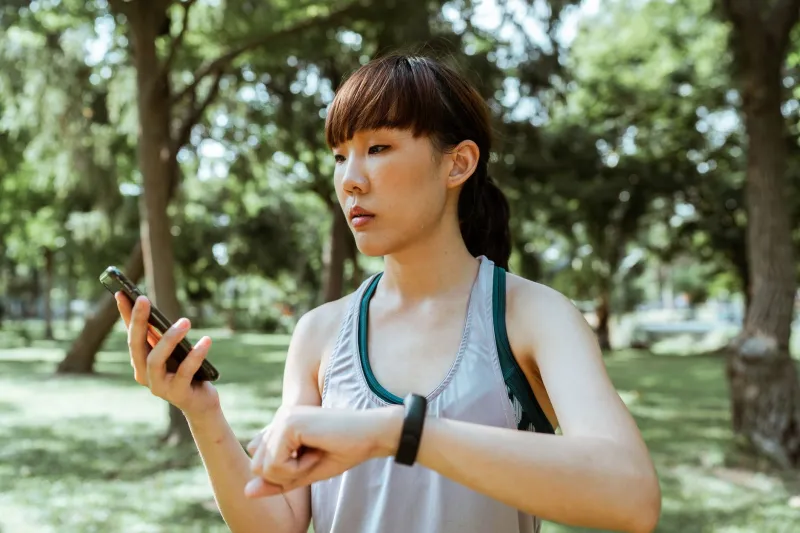
Somewhere along the way, wellness got very interested in your data. Not just the wearables tracking your sleep and heart rate variability — though those are their own conversation — but the whole ecosystem of accountability culture that has quietly embedded itself into how we think about health habits. The apps with their daily streaks. The group fitness challenges where everyone posts their check-ins. The habit trackers with their satisfying little X marks that feel great until you miss a day and suddenly the whole visual is ruined.
The pitch is always the same: external accountability improves follow-through. And there's enough research behind it that the claim is hard to argue with outright. But here's what the pitch leaves out — for whom, under what conditions, and at what psychological cost.
The Accountability Assumption
Accountability culture in wellness operates on a fairly simple behavioral model: if you make your habits visible to others, you're more likely to maintain them. Public commitment creates social pressure, and social pressure motivates action. This works well in certain contexts — it's a legitimate mechanism, not a myth.
But the wellness industry has taken that kernel of truth and built an enormous commercial infrastructure around it. Fitness apps monetize your streaks. Challenges are designed to go viral. Group accountability programs charge monthly fees to give you the experience of being watched. The incentive to sell accountability has far outpaced the actual evidence about when and for whom it's useful.
What gets lost in all of this is the significant body of research suggesting that external accountability can actively undermine intrinsic motivation — the kind of motivation that actually sustains long-term behavior change. When you start doing something to avoid the shame of a broken streak, or to keep up with your group chat, or because the app is going to send you a passive-aggressive notification if you don't, you are no longer doing it for yourself. And that shift matters more than most wellness brands will tell you.
The Shame Spiral Nobody Talks About
Here's the pattern that plays out with uncomfortable regularity: person starts a wellness challenge, person is enthusiastic for the first week or two, person misses a day or falls behind the group, person feels shame, person quietly disengages from the challenge entirely, person feels worse about themselves than they did before the challenge started.
This is not a personal failure. It is a predictable outcome of a poorly designed system.
Psychologists who study behavior change will tell you that shame is one of the least effective motivators for sustained action. It produces short bursts of compliance followed by avoidance. It narrows thinking and undermines the self-efficacy that actual habit formation requires. A person who feels ashamed about missing their meditation streak is not a person who is going to sit down tomorrow and try again with curiosity and self-compassion. They're a person who is going to avoid thinking about meditation entirely for the next two weeks.
And yet the accountability industry keeps building shame into its products, because shame keeps people engaged — even if that engagement looks more like anxious checking and guilt management than genuine wellness practice.
The Visibility Problem
There's a specific version of this worth examining: public accountability, where your wellness habits are visible to a group. This is the logic behind group fitness challenges, social media check-ins, and apps that let your friends see whether you worked out today.
For some people — specifically, people who are already fairly secure in their habits and who have warm, non-competitive relationships with the group — this can be genuinely supportive. The social element adds meaning, not just pressure.
But for a significant portion of people, public visibility of wellness habits does something more complicated. It shifts the practice from an internal experience to a performance. You're no longer meditating because it helps you feel grounded. You're meditating because you need something to post. The practice becomes about the record of the practice, which is a subtle but important corruption of the whole thing.
This is especially worth naming in communities — like yoga and fitness studios — where there's already a lot of ambient social comparison happening. Adding structured public accountability on top of an already comparison-heavy environment can quietly turn a supportive community into a competitive one, even when nobody intends it.
What Actually Works for People Who Hate Being Watched
If external accountability systems consistently make you feel worse rather than better, that's not a character flaw. It's useful information about how your particular brain responds to pressure and visibility. Some people are genuinely more consistent — and more at ease — when their wellness practice is entirely private.
A few approaches worth trying if you're in that camp:
Reduce the stakes of individual days. Instead of tracking whether you did the thing every day, track how you felt over a week or a month. This shifts the focus from compliance to experience, which tends to be more honest and more sustainable.
Swap streaks for intentions. Before a practice session, take thirty seconds to set an intention — not a goal, just a direction. Afterward, notice whether you met it. This keeps you accountable to yourself without the external apparatus.
Find accountability in reflection rather than reporting. A private journal where you write briefly about your practice — what you did, how it felt, what you noticed — creates a form of accountability that is entirely internal. You're answerable to your own record, not to a group or an algorithm.
Choose one person over a group. If you do want some social element, a single trusted friend who checks in with genuine curiosity is almost always more supportive than a group challenge. One person can hold space for nuance. A group tends to flatten everything into a binary of on-track or off-track.
The Deeper Question
Underneath all of this is a question that accountability culture tends to avoid: Why do you want to do this in the first place?
Not why you think you should. Not why the app or the challenge or the community is telling you it's important. Why you, in your actual body, in your actual life, want to feel better or move more or sit quietly for a few minutes each day.
If you have a genuine, personal answer to that question — even a small, unglamorous one — it will serve you better than any streak counter ever will. Intrinsic motivation is unsexy. It doesn't come with badges or leaderboards. But it's the thing that keeps people showing up, quietly and consistently, long after the challenge has ended and the group chat has gone silent.
You don't need an audience for your wellness. You need a reason that belongs to you.