You Live Five Minutes from the Water and You're Still Burned Out — Here's Why
The Park Is Right There. So Why Don't You Feel Better?
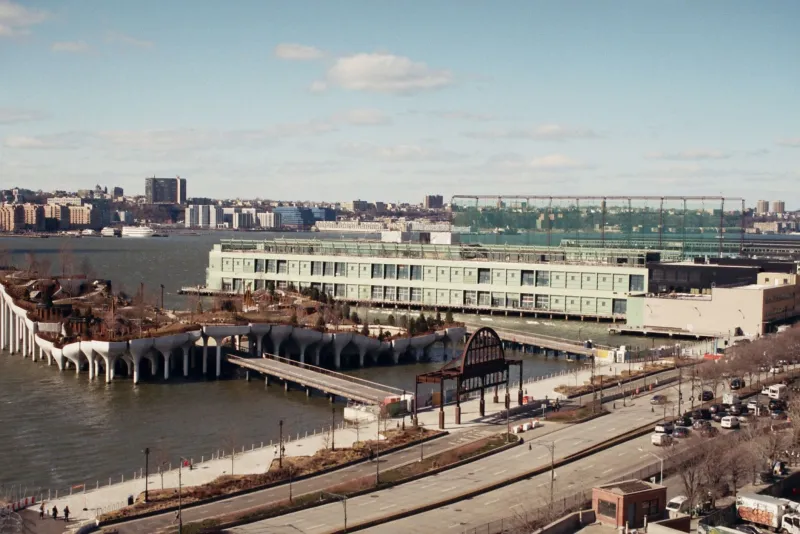
Astoria Park sits at the edge of Queens like a gift nobody fully opened. The waterfront stretches along the East River, the Hell Gate Bridge looms overhead like something out of a fever dream, and on a clear day you can see Manhattan shimmering across the water. Transmitter Park, Rainey Park, Socrates Sculpture Park — this neighborhood is genuinely flush with outdoor space in a way that most New Yorkers would trade a kidney for.
And yet.
You're still anxious. Still exhausted. Still reaching for your phone the moment you sit down on a bench. Still treating the park as a backdrop for a photo you'll post later rather than a place you actually inhabit.
That's the paradox nobody talks about: proximity to nature is not the same thing as connection to it. Access is a prerequisite, not a practice. And in a neighborhood as vibrant — and as overstimulating — as Astoria, it's surprisingly easy to live surrounded by natural beauty while remaining completely sealed off from its actual benefits.
The Instagram Problem (Yes, We're Going There)
Let's be honest about something. When was the last time you went to Astoria Park and didn't take a picture? Not a judgment — this is a no-shame zone — but it's worth sitting with. The moment we frame a view through a camera lens, we shift from experiencing it to documenting it. The nervous system doesn't get to downregulate. The mind doesn't get to wander productively. We're still performing, just outdoors now.
Social media has done something quietly damaging to our relationship with natural spaces. It's turned them into content. The waterfront becomes a backdrop. The cherry blossoms become a caption. The sunset becomes a story that expires in 24 hours. We get the dopamine hit of sharing something beautiful without getting any of the actual restoration that beauty is supposed to deliver.
This isn't a screed against phones. It's an invitation to notice the difference between two very different experiences: visiting nature and being in it.
What the Research Actually Says About Nature and the Nervous System
There's a growing body of science behind what wellness folks have been saying for years. Time in natural environments — real, present-moment time — measurably reduces cortisol levels, lowers heart rate, and activates the parasympathetic nervous system (the rest-and-digest counterpart to fight-or-flight). Japanese researchers coined the term shinrin-yoku, or forest bathing, for the practice of slow, sensory immersion in natural settings. The results are not subtle.
But here's the catch: most of these benefits kick in only when you're actually paying attention. Passive exposure helps a little. Intentional, sensory engagement helps a lot. Walking through Astoria Park while mentally composing your response to a work email is not the same as walking through Astoria Park while noticing the temperature of the air on your forearms.
Your nervous system needs your full attention to do its job. And that's the piece most of us skip.
Why Familiarity Breeds Disconnection
There's another layer here that's specific to people who live near these spaces, as opposed to visiting them. When you walk past the same park entrance every single day, it stops registering. Familiarity dulls perception. The brain, always hunting for efficiency, files it under "known" and moves on. You stop seeing the river. You stop noticing the light. The space becomes part of the wallpaper of your commute.
This is why tourists sometimes seem more present in your own neighborhood than you do. They're encountering it for the first time. You've seen it a thousand times — which means, neurologically, you've kind of stopped seeing it at all.
Reclaiming that sense of freshness takes deliberate effort. It means approaching familiar places with what Zen practitioners call beginner's mind — a willingness to encounter something as if for the first time, even when you've been there a hundred times before.
Turning Familiar Spots into Real Mindfulness Anchors
So how do you actually do this? How do you transform a park you've walked through a thousand times into something that genuinely restores you? A few concrete practices that work:
The sensory inventory. Before you pull out your phone, spend two full minutes doing a deliberate sensory scan. What do you hear? Not just "birds" — which specific sounds, and where are they coming from? What does the ground feel like under your feet? What's the temperature differential between sun and shade? This isn't woo-woo; it's literally how you interrupt autopilot mode and drop into presence.
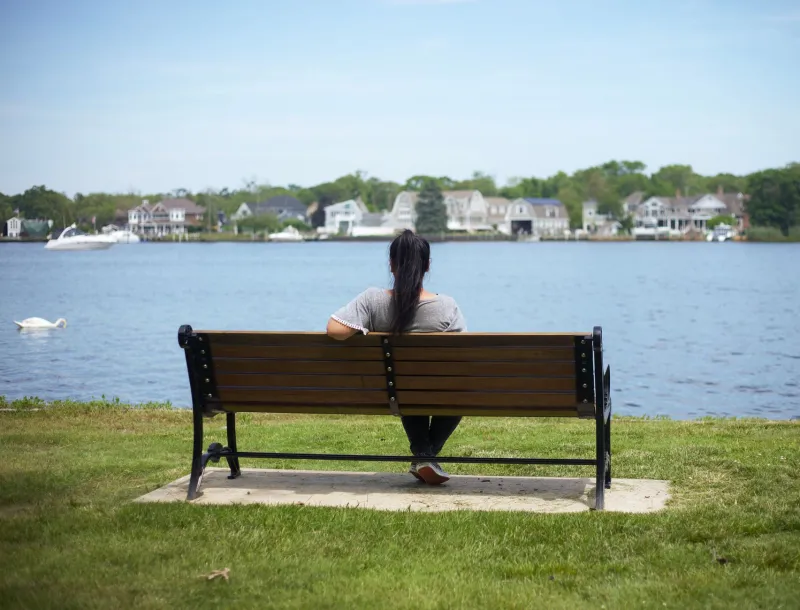
Pick one spot and return to it. Instead of wandering the whole park, choose a single bench, a particular stretch of waterfront, a specific tree. Visit it repeatedly, across seasons, across moods. Notice how it changes. Notice how you change in relation to it. Depth of relationship with place is built through repetition and attention, not variety.
Leave the headphones at home — at least sometimes. Podcasts and playlists are wonderful, but they're also another layer of mediation between you and your environment. Try one walk a week with no audio input. Let the soundscape of the park be the content.
Breathe with intention before you enter. This one sounds almost too simple, but it works. Before you step through the gate at Astoria Park, pause for three slow, deliberate breaths. Signal to your body that this is a transition — that you're moving from task mode into something else. The breath is a threshold.
Let yourself be bored. Sit somewhere with nothing to do and nowhere to be and resist the urge to fill the silence. Boredom, it turns out, is a doorway. The mind that has nothing to do eventually starts to notice things. That noticing is the beginning of real presence.
Access Is a Gift. Practice Is the Work.
Astoria is genuinely lucky. Green space in New York City is inequitably distributed, and our corner of Queens punches above its weight. That's worth acknowledging — and worth honoring by actually using what we have.
But access is just the starting point. The waterfront doesn't heal you by existing. The park doesn't restore your nervous system because you drove past it on your way to the grocery store. Nature's benefits aren't ambient. They're not absorbed through proximity alone.
The gap between living near something beautiful and actually receiving it — that gap is where practice lives. And closing it doesn't require a retreat to the Catskills or a weeklong digital detox. It requires five deliberate minutes at a bench by the river, with your phone in your pocket and your attention finally, actually here.
That's the whole practice, honestly. Show up. Pay attention. Let it matter.
You've already got the park. Now try actually going to it.