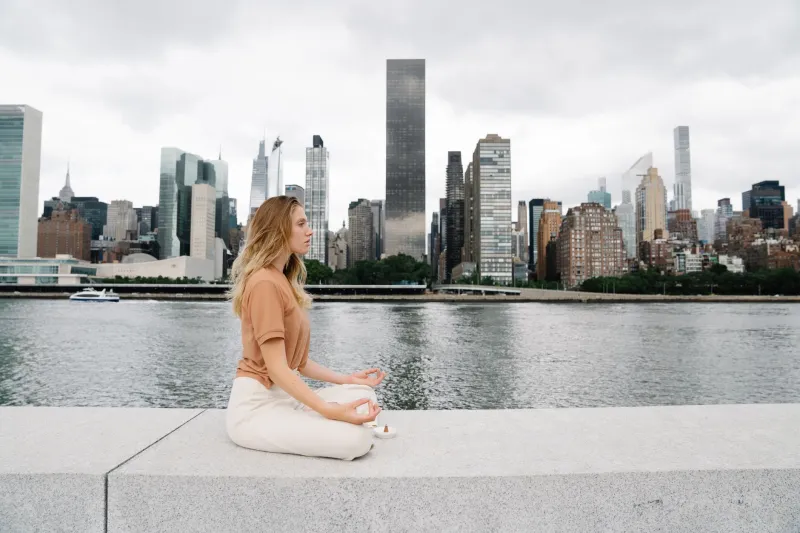
The N Train Doesn't Care About Your Zen — And That's Exactly the Point
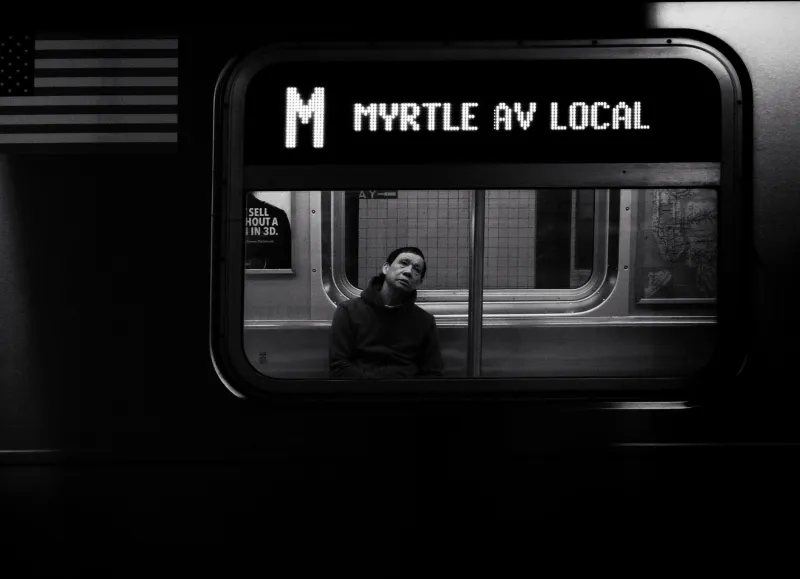
It's 8:14 a.m. You're wedged between a guy eating a breakfast sandwich and a stroller that's somehow taking up three seats. The R train is delayed — again — and your meditation app is chirping something about a "serene mountain lake" through your earbuds while the person behind you coughs without covering their mouth.
This is your practice. No, seriously.
We've been sold a very specific image of what mindfulness looks like: soft lighting, clean linen, maybe a diffuser going. And if your wellness routine lives exclusively in that fantasy, it's going to shatter every single morning somewhere between the Ditmars Boulevard platform and the chaos of Queensboro Plaza. The commute is where your practice either means something or it doesn't.
Why We Keep Trying to Escape the Commute
The wellness industry has a vested interest in convincing you that your environment needs to be optimized before any real inner work can happen. Buy the noise-canceling headphones. Download the app. Find the "focus" playlist. The implicit message is that stillness requires the right conditions — and the subway is about as far from those conditions as you can get.
But here's the problem with that logic: you can't train resilience in a controlled environment. A muscle only grows when it's placed under stress. And your nervous system — your actual capacity for calm — works the same way.
Real mindfulness isn't the absence of distraction. It's noticing distraction without being hijacked by it. The N train is basically a live-fire drill for exactly that skill.
What Happens When You Stop Fighting It
There's a specific kind of suffering that comes from being uncomfortable and also hating yourself for being uncomfortable. You're stuck on a delayed train and you're annoyed — and then you're annoyed at yourself for being annoyed, because you've been practicing mindfulness for six months and shouldn't this be easier by now?
That second layer of judgment is where most of us lose the plot.
Try something different tomorrow morning. Don't open an app. Don't put in your earbuds immediately. Just... sit with the noise for two minutes. Not to fix it, not to transcend it — just to notice it. The metallic screech of the tracks. The ambient conversations you can't quite make out. The particular smell of underground air that every New Yorker knows but no one can describe.
You're not meditating on a mountain. You're meditating on your actual life. That's significantly more useful.
Boredom Is a Feature, Not a Bug
One of the most quietly radical things you can do for your mental health in 2024 is allow yourself to be bored. Not entertained-bored, where you're scrolling through content that doesn't interest you. Actually bored. Staring-at-the-subway-map-you've-memorized bored.
Research on what neuroscientists call the "default mode network" suggests that the brain does some of its most important processing — consolidating memories, generating creative connections, working through emotional residue — precisely when we're not actively stimulating it. Every time you reach for your phone the second you sit down, you're interrupting that process.
The commute used to be one of the few guaranteed pockets of unstructured time in a working adult's day. We've since filled it entirely. And we wonder why we feel mentally cluttered all the time.
The Outer-Borough Version of This
If you're coming out of Astoria, you know the commute isn't a quick hop. You're probably looking at 35 to 50 minutes minimum to get into Manhattan, depending on where you're headed and whether the MTA is feeling cooperative. That used to feel like a penalty for not living in a trendier zip code.
Flip it. That's 35 to 50 minutes of no one being able to reach you with an urgent Slack message. No one asking you to make a decision. No task you're supposed to be completing. The train is, structurally, one of the last places where it's genuinely acceptable to just exist.
You don't have to meditate. You don't have to breathe in a specific pattern. You can watch the guy across from you fall asleep and jolt awake at every stop, and just notice that you noticed it, and let it be kind of funny, and let that be enough.
Practical Footholds (Without Turning This Into a Homework Assignment)
If you want a few actual entry points, here's what tends to work without requiring any apps, gear, or performance:
Anchor to sensation. Feel your feet on the floor of the train car. Feel the seat or pole under your hands. This isn't mystical — it's just redirecting attention to something physical and present when your brain wants to spiral into tomorrow's to-do list.
Let sounds be sounds. Instead of categorizing noise as "annoying" or "acceptable," try treating the auditory environment like weather. It's just there. It rises and falls. You don't have to do anything about it.
Notice the urge without acting on it. The next time you reach for your phone out of pure reflex — not because you actually need anything, just because your hand moved — pause for three seconds before unlocking the screen. That pause is the practice.
Drop the productivity math. The commute doesn't need to produce anything. Not a finished podcast, not a completed email draft, not a meditation session you can log. Sometimes the most healing thing you can do is refuse to extract value from a moment.
The Messy Truth About Practice
The studios and apps and retreats aren't wrong, exactly. There's genuine value in learning the mechanics of breathwork and meditation in a quiet, supported environment. But if that's the only place your practice lives, it's decorative. It's a performance of wellness rather than the real thing.
The real thing happens when the train stops between stations for eight minutes and you don't know why, and your chest tightens, and you notice that tightening, and you breathe anyway — not because an app told you to, but because you've practiced sitting with discomfort enough times that your nervous system has started to trust you.
Astoria is not a serene mountain lake. It's loud and crowded and full of people trying to get somewhere. So are you. That's not an obstacle to your mindfulness practice. That's what your mindfulness practice is for.